

Working and Studying in Singapore — What Asian Workers and Students Actually Need to Know
Research Methodology
Information in this guide was verified using official channels including the Ministry of Manpower (MOM) Singapore, the MyCareersFuture portal, the National University of Singapore (NUS), and Nanyang Technological University (NTU). All salary and pass parameters reflect officially published 2026 data.
Last Fact-Checked: June 2, 2026
Singapore is one of the most organized and well-regulated destinations for foreign workers and international students in Asia.
It is also one of the most expensive. And one of the most competitive.
People move to Singapore for genuinely good reasons: High salaries compared to neighboring countries, a stable and safe environment, English as the main working language, and strong universities with global reputations.
But Singapore is not an easy destination to enter or to afford. The government carefully controls who can work there and under what conditions. The cost of living is significantly higher than most other Asian destinations.
This guide covers both workers and students honestly. What the work pass system actually looks like, what each pass requires, what it genuinely costs to live there, what universities are worth targeting, and what to know before you commit to Singapore as your destination.
Singapore Work Passes at a Glance (2026)
| Pass Type | Minimum Salary | Who It's For |
|---|---|---|
| Employment Pass | S$5,600+ / month (S$6,200+ for Finance) | Professionals, managers, and executives |
| S Pass | S$3,300+ / month (S$3,800+ for Finance) | Mid-level skilled workers |
| Work Permit | Varies (No fixed minimum) | Semi-skilled workers in approved sectors |
How Singapore Controls Who Can Work There
This is the most important thing to understand about Singapore before anything else.
Singapore does not have an open labor market for foreign workers. You cannot simply arrive in Singapore and look for work. In almost every case, you need a job offer from a Singaporean employer and an approved work pass before you can legally work there.
Your employer applies for the work pass on your behalf through the Ministry of Manpower (MOM), which is the Singapore government agency that regulates employment. MOM sets clear rules about which pass each type of worker qualifies for, what minimum salary they must be paid, and how many foreign workers each employer can hire in total.
This system is genuinely different from Gulf countries where employer sponsorship exists but government oversight is less structured. In Singapore the government defines the categories, sets the salary floors, monitors compliance, and enforces employer obligations. Workers have clearer protections built into the system from the start.
That said, the system also means that changing employers requires applying for a new work pass. Your right to stay and work in Singapore is tied to your employment in a specific role with a specific company.
The Three Main Work Pass Types — Which One Are You
Singapore has three main work pass categories for foreign workers. Understanding which one applies to your situation is the starting point for everything else.
According to current MOM requirements, salary thresholds increase with age and are reviewed regularly. Always verify current figures directly at mom.gov.sg before applying.
Employment Pass — For Professionals and Managers
The Employment Pass is for foreign professionals, managers, and executives in skilled roles. This is the pass for people working in technology, finance, engineering, healthcare, consulting, and similar professional fields.
According to current MOM requirements, you must earn a minimum fixed monthly salary of S$5,600 in most sectors to qualify in 2026. For financial services roles the minimum is S$6,200 per month. These thresholds increase with age. A professional in their mid-40s may need to earn significantly more to meet MOM benchmarks because the expectation is that more experienced professionals command higher salaries.
Salary alone is not enough. Since 2023, all Employment Pass applications must also pass a points-based assessment called COMPASS. This framework awards points across four criteria including how competitive your salary is relative to local workers in similar roles, your qualifications, your employer's workforce diversity, and whether your employer has shown genuine efforts to hire locally. You need at least 40 points to qualify.
There is no quota on Employment Pass holders. However, before applying for an EP, your employer must advertise the job on MyCareersFuture for at least 14 days to demonstrate genuine consideration of local candidates first.
S Pass — For Mid-Level Skilled Workers
The S Pass is for foreign workers in mid-level skilled roles. It sits between the Employment Pass and the Work Permit in terms of skill and salary level.
According to current MOM requirements, the minimum monthly salary for an S Pass in 2026 is S$3,300 in most sectors and S$3,800 in financial services. Like the Employment Pass, the required salary increases with age.
The S Pass has a quota system. S Pass holders can make up a maximum of 10 percent of the total workforce in service sector companies and 15 percent in construction, manufacturing, marine shipyard, and process sectors. Employers who have already reached their quota cannot hire additional S Pass holders even if the candidate qualifies individually.
Work Permit — For Semi-Skilled Workers
The Work Permit covers semi-skilled foreign workers in construction, manufacturing, marine shipyard, process, and service industries. There is no fixed minimum salary for Work Permit holders but employers pay a monthly levy to the government for each Work Permit worker they employ.
Work Permit eligibility depends on your nationality. Singapore has designated source countries for Work Permits in different sectors. For construction and marine shipyard work, approved source countries include India, Bangladesh, Myanmar, the Philippines, Sri Lanka, and Thailand among others.
Work Permit holders in construction and some other sectors are typically housed in dormitories provided or arranged by their employer. The quality of dormitory accommodation varies and has been a subject of ongoing government attention and improvement efforts.
Need a Singapore-ready CV?
Create a high-quality, professional, and ATS-friendly CV with SmartCV Builders. No sign-ups required, no watermarks, and instant PDF download.
Create Your Singapore CV FreeWhat Singapore Actually Costs — The Honest Numbers
Singapore is consistently ranked as one of the most expensive cities in the world to live in. This is not exaggerated.
Before accepting any job offer or making any study plan, understanding the real cost of living is essential.
Accommodation
This is the biggest expense for most people in Singapore. A room in a shared HDB flat typically costs between S$700 and S$1,500 per month depending on location and room size. A one-bedroom apartment of your own in a reasonable location costs S$2,500 to S$4,000 per month or more.
For Work Permit holders in construction and some other sectors, employers are required to provide or arrange accommodation. For Employment Pass and S Pass holders, accommodation is your own responsibility.
Food
Singapore has a strong hawker center culture where cooked food at food courts is genuinely affordable. A meal at a hawker center typically costs S$3 to S$6. Eating at restaurants or cafes regularly is significantly more expensive. Budget around S$300 to S$600 per month for food depending on your habits.
Transport
Singapore's public transport system is efficient and relatively affordable. A monthly adult travel card costs around S$120 to S$150 depending on distance.
Practical Monthly Budget Example
For a professional on an Employment Pass living in shared accommodation:
Shared room accommodation S$900 to S$1,200. Food S$400 to S$600. Transport S$150. Phone and utilities S$100 to S$150. Miscellaneous S$200 to S$300.
Total roughly S$1,750 to S$2,400 per month on living costs before any savings.
With a minimum EP salary of S$5,600 per month this leaves meaningful room for savings. For S Pass holders earning closer to the S$3,300 minimum, living costs consume a much higher proportion of income and budgeting carefully is essential.
Finding a Job in Singapore
Because you need a job offer before you can get a work pass, finding employment is the first step in the entire process.
MyCareersFuture at mycareersfuture.gov.sg is Singapore's government-linked job portal. Many employers are required to post on it before hiring foreign workers.
LinkedIn is widely used by Singapore employers, particularly for professional and managerial roles. Having a complete and up to date LinkedIn profile matters more in Singapore than in many other Asian countries.
JobStreet Singapore and Indeed Singapore are active job boards with listings across sectors.
Recruitment agencies like Robert Walters, Hays, and Michael Page all have strong Singapore operations and regularly place foreign professionals.
For Work Permit level roles in construction and services, licensed employment agencies that specialize in foreign worker placement handle most recruitment. Verify any agency's MOM licensing before engaging with them.
Your CV for Singapore Jobs
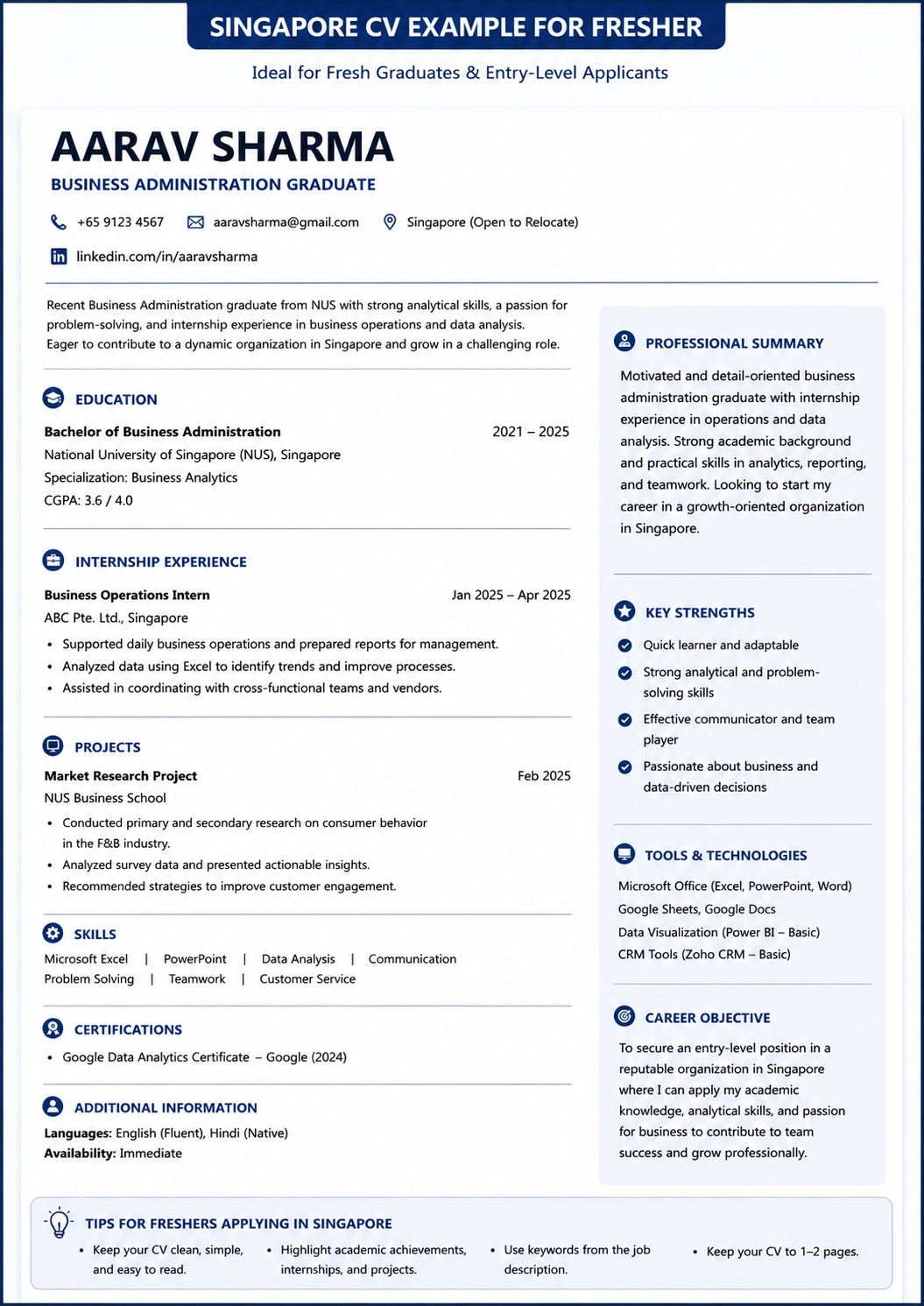
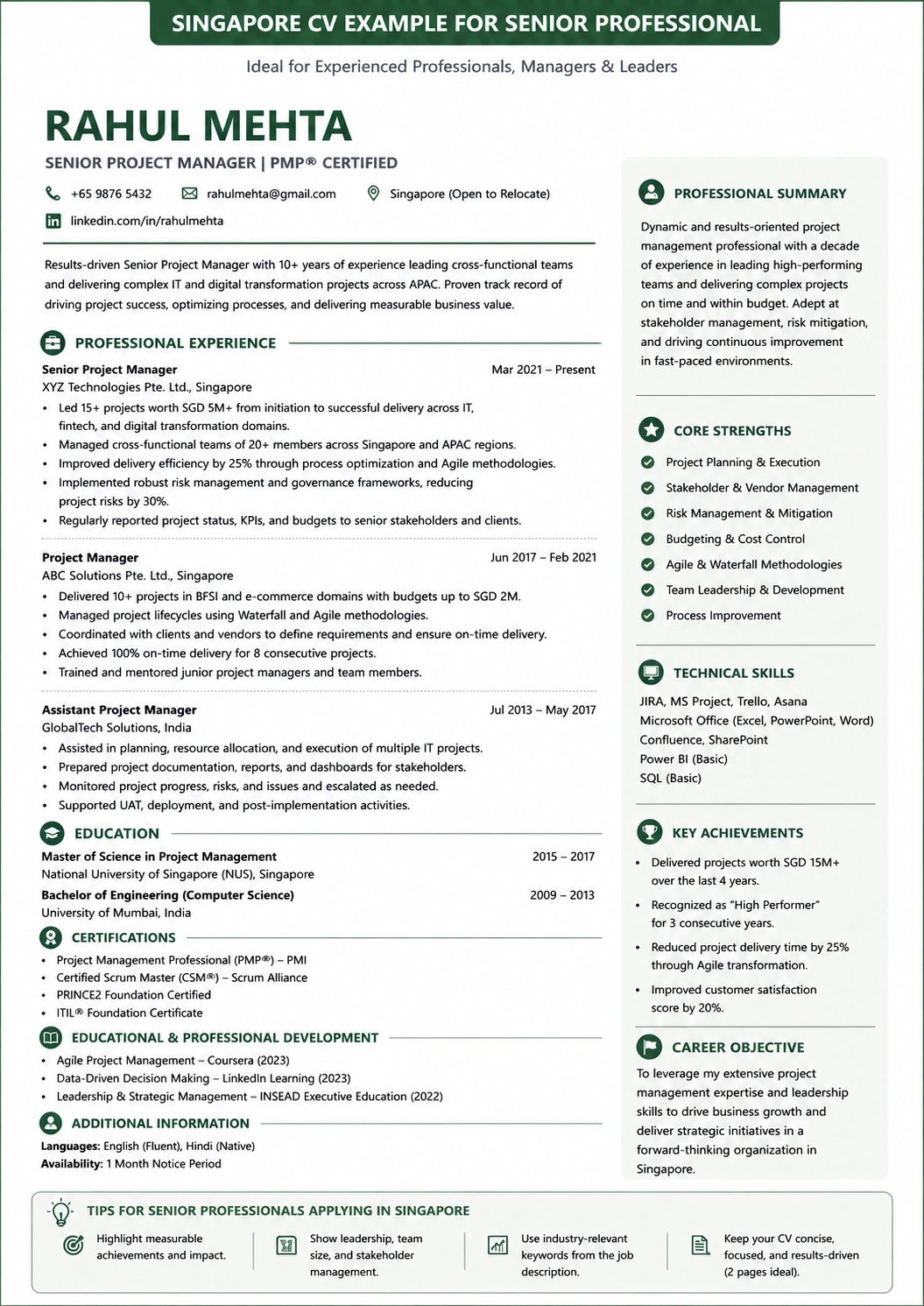
Singapore employers generally follow international professional CV standards.
For professional Employment Pass level roles, a clean two-page CV in English is the standard. Photos are not expected, unlike Gulf and some East Asian markets. Personal details like age, marital status, and religion are not required.
Your CV should lead with a clear professional summary, followed by work experience in reverse chronological order with specific achievements and outcomes, then skills and education.
Keywords matter because many Singapore companies use ATS systems to screen applications. However, many Greenhouse implementations rely on recruiter review rather than automatic rejection, so focus on readable formatting.
Read each job description carefully and make sure the specific skills and tools they mention appear in your CV if you genuinely have them. For a full explanation of how ATS systems work and how to make your CV readable by them, see our ATS CV Guide.
For S Pass applications, your CV should clearly show relevant qualifications, specific technical skills, and work experience that demonstrates mid-level skilled competency.
Fresher CV Example
Senior Professional CV Example
Studying in Singapore — What Students Need to Know
The Universities Worth Targeting
Singapore has a small number of genuinely world-class universities and a larger number of private institutions that vary significantly in quality and international recognition.
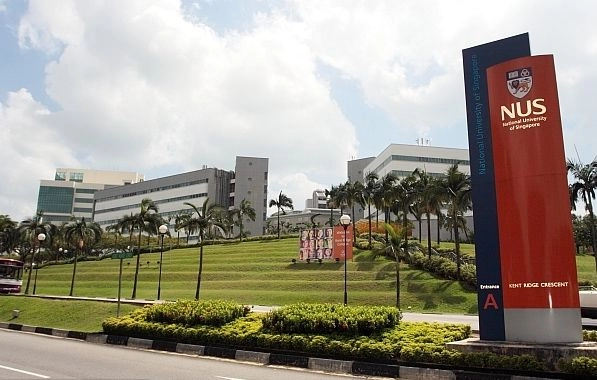
National University of Singapore (NUS)
NUS consistently ranks among the global top 10 to 20 in recent QS rankings. It is particularly strong in computer science, AI, data science, engineering, business, medicine, and law.
Nanyang Technological University (NTU)
NTU is especially strong in engineering, computer science, robotics, materials science, and technology research. It consistently ranks among the global top universities alongside NUS.

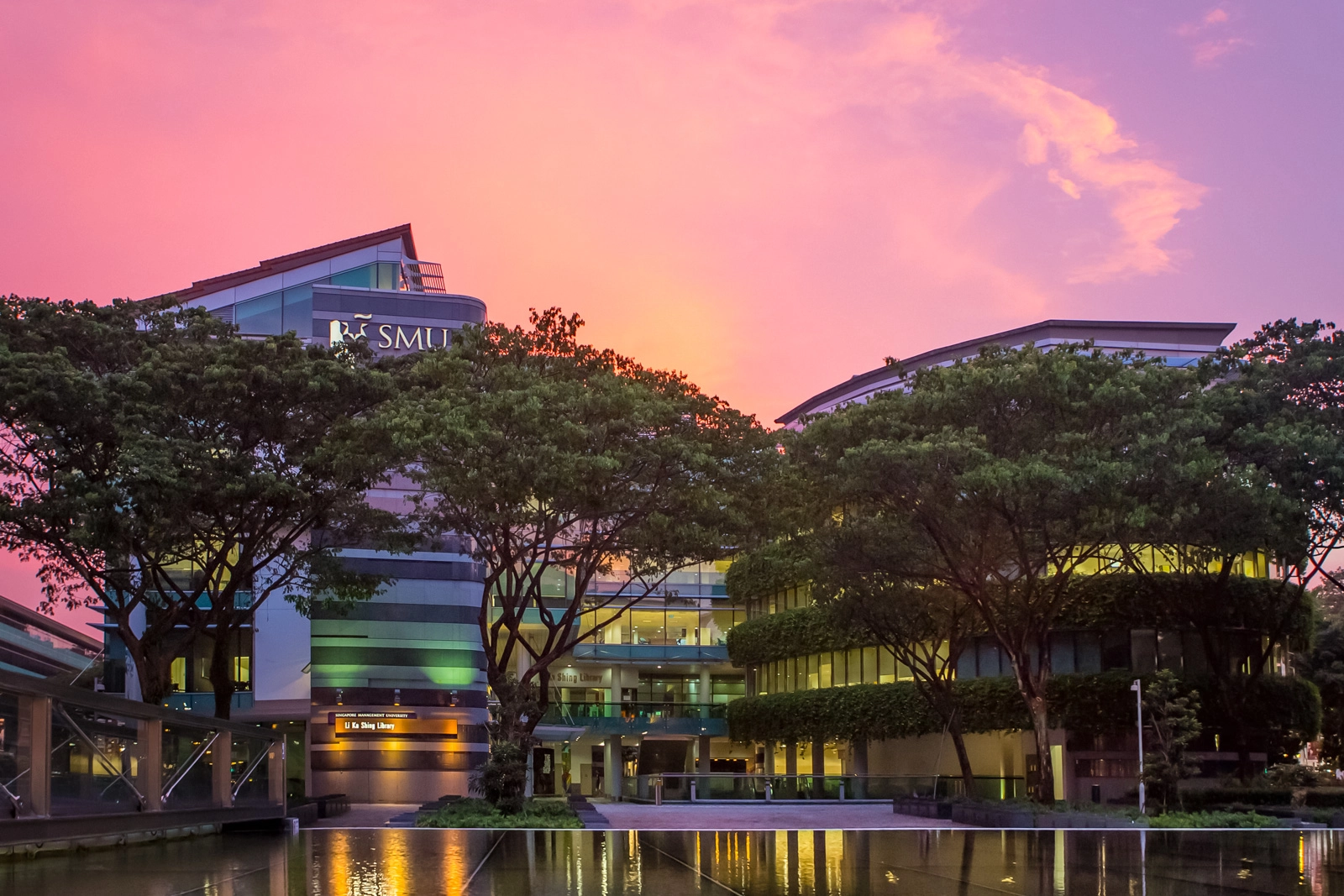
Singapore Management University (SMU)
SMU is smaller and more specialized, focusing on business, finance, economics, accounting, and management. It is well known among Singapore employers for business careers in the region.
Singapore University of Technology and Design (SUTD)
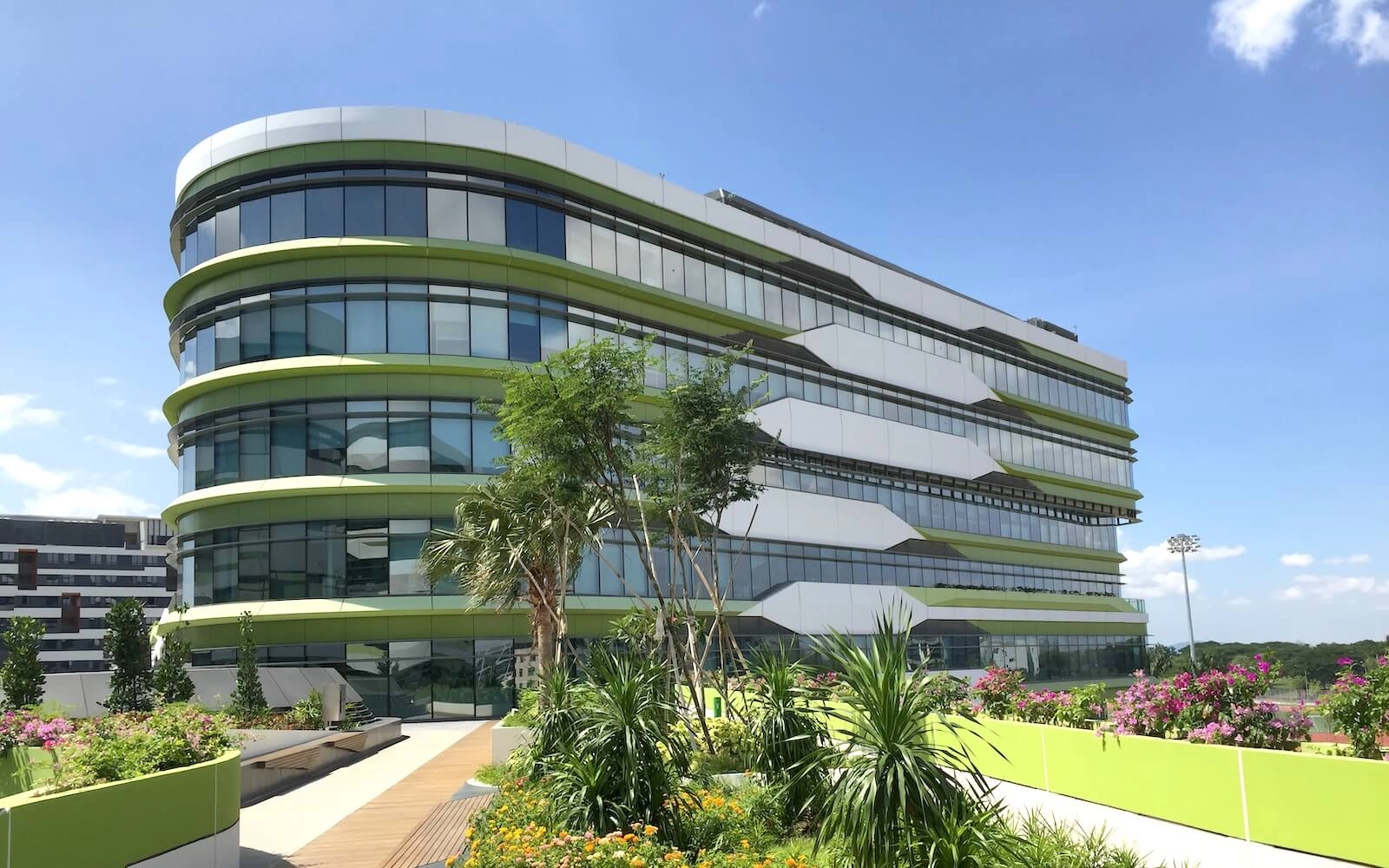
SUTD focuses on engineering, design, technology, and innovation with a practical and interdisciplinary approach.
The Private College Warning
Singapore has a number of private colleges that are not the same as the public universities above. Some consultancies actively push students toward these institutions because commissions are easier to earn.
Before enrolling in any Singapore institution, check whether it is a publicly funded autonomous university recognized by the Singapore government. Check global rankings independently. Check graduate employment outcomes. Verify that the degree is awarded by the actual institution.
Spending significant money on a private college degree in Singapore that is not well recognized internationally is a costly mistake that has affected many international students.
Does CV Matter for University Applications?
For bachelor's degree applications, your academic grades, English proficiency test scores, and personal statement matter most. A CV is secondary.
For master's degree applications, your CV becomes meaningfully more important. NUS and NTU master's programs look at your bachelor's GPA, work experience where relevant, research experience, recommendation letters, statement of purpose, and your overall profile. A well-prepared CV can differentiate you from other candidates with similar academic scores.
Can International Students Work Part Time?
Yes. Student pass holders can generally work part time subject to their institution's rules and Singapore visa conditions. Always verify the current rules with your university and MOM after admission as conditions can change.
Part time work in Singapore pays roughly S$10 to S$15 per hour for typical student jobs. At S$12 per hour, working 16 hours per week, you earn roughly S$800 per month. Typical monthly expenses for a student are likely S$1,000 to S$2,000 or more. Part time work helps with daily expenses but does not cover full living costs for most students.
The English Advantage
Unlike Japan and Korea where language is a significant barrier for daily life, Singapore operates in English across virtually every professional and commercial environment.
All major universities teach in English. Most professional workplaces operate in English. Government services, banking, healthcare, and administrative processes are conducted in English.
This dramatically reduces the adjustment challenge for workers and students from South and Southeast Asian countries. The absence of a language barrier is a genuine and significant practical advantage compared to other Asian destinations.
Your Rights as a Worker in Singapore
MOM actively enforces worker rights in Singapore and has clear mechanisms for reporting problems.
If your employer fails to pay your salary on time, you can file a complaint with MOM through mom.gov.sg. MOM investigates salary disputes and has the authority to take action against employers who violate employment law.
Passport confiscation by employers is illegal in Singapore. You should always retain your own passport. If an employer tries to hold your passport, report this to MOM immediately.
Employment Pass and S Pass holders generally have flexibility to seek new employment, though the new employer must still apply for a new work pass before you can legally switch roles.
Sources and Further Reading
For verified official information on everything covered in this guide:
- Ministry of Manpower Singapore: mom.gov.sg
- MOM Work Pass information: mom.gov.sg/passes-and-permits
- MyCareersFuture job portal: mycareersfuture.gov.sg
- National University of Singapore: nus.edu.sg
- Nanyang Technological University: ntu.edu.sg
Frequently Asked Questions
Can I arrive in Singapore and then look for work?
In most cases, no. You need a job offer and an approved work pass before you can legally work in Singapore. Some people enter on a short-term visit pass to attend interviews but you cannot begin working until your work pass is approved. Planning your job search from your home country and securing an offer before you travel is the standard approach.
What is COMPASS and how does it affect my Employment Pass application?
COMPASS is a points-based assessment framework that MOM introduced for all Employment Pass applications. It evaluates criteria including salary, qualifications, workforce diversity, and support for local hiring. You need at least 40 points to qualify. Meeting the minimum salary alone is no longer sufficient.
Is Singapore expensive to live in compared to other Asian countries?
Yes, significantly. Singapore is consistently ranked among the most expensive cities in Asia and globally. Accommodation is the biggest cost, with a shared room typically costing S$700 to S$1,500 per month. Researching real living costs before accepting any offer is important.
Do I need to speak Mandarin or any other language to work in Singapore?
No. English is the main working language across virtually all professional and commercial environments in Singapore. Mandarin or other languages can be an advantage for specific roles communicating with regional clients, but they are not a requirement for most roles.
What happens if my employer does not pay my salary in Singapore?
File a complaint with MOM through mom.gov.sg. Singapore has clear legal mechanisms for resolving salary disputes, and MOM actively investigates and enforces payment obligations. Document all contracts and payment records before filing.
Are Singapore university degrees recognized internationally?
For the main public universities, yes. Degrees from NUS and NTU are recognized globally by employers and universities. SMU is well known in the region for business fields. Private college degrees from lesser-known institutions may not carry the same international recognition.
Can a student part time job cover living expenses in Singapore?
Generally no. Part time work at typical student rates generates around S$600 to S$800 per month, while monthly living costs for a student are likely S$1,000 to S$2,000 or more. Part time work supplements income but does not cover full expenses.
Ready to Apply
in Singapore?
Need Help Moving to Singapore?
Everything you need in one place — verified agencies, trusted consultancies, and live job openings.
Free CV Builder
Build Your Singapore CV for Free
Pick from professional templates to build a clean, job-ready CV in minutes. 100% Free.
Cover Letter Maker
Professional matching correspondence. Build for Free.
Business Card Maker
Sleek, modern designs for authority branding. 100% Free.
100% Free • No Credit Card • No Watermarks • Instant Access
More Guides
More Guides
Explore more country guides to help you navigate your international job search.
Japan Work Guide
Visas, jobs, accommodation, banking, and what living in Japan actually costs. A practical guide for workers and students from Asia moving to Japan in 2026.
Gulf Work Guide
Honest guide to working in Gulf countries. Avoid scams, understand contracts, know your rights, and build a CV that gets you hired in UAE, Saudi, and Qatar.
South Korea Guide
Honest guide to South Korea. Learn about GKS scholarships, E-9 visas, Korean language reality, contract verification, and what to know before you go.