

How to Optimize Your LinkedIn Profile When You Are Applying for Jobs in Asia and the Gulf
Research Methodology
This guide is based on patterns observed while researching Gulf, Singapore, Japan, and South Korea hiring markets and reviewing recruiter recommendations from regional employers. Recommendations reflect what actually influences recruiter decisions rather than generic LinkedIn marketing advice.
Last Fact-Checked: June 8, 2026
Most LinkedIn guides are written for people trying to become influencers. Most recruiters are not evaluating your profile the same way LinkedIn creators evaluate content. This guide is for professionals trying to get hired in regional markets.
The advice here is based on what actually affects whether a recruiter contacts you or moves on — not what gets likes on LinkedIn.
What Recruiters Actually Do When They Find Your Profile
Before anything else it helps to understand what happens when a regional recruiter opens your profile.
Recruiters in active markets typically handle a high volume of profiles daily. Because of this, they scan rather than read thoroughly on their initial pass, forming a quick impression within seconds based on a few visible details.
If these key details align with the role, they will click through to evaluate your specific work history. If your primary profile layout is cluttered or lacks immediate relevance, they are highly likely to move on to the next candidate.
What a Recruiter Sees First
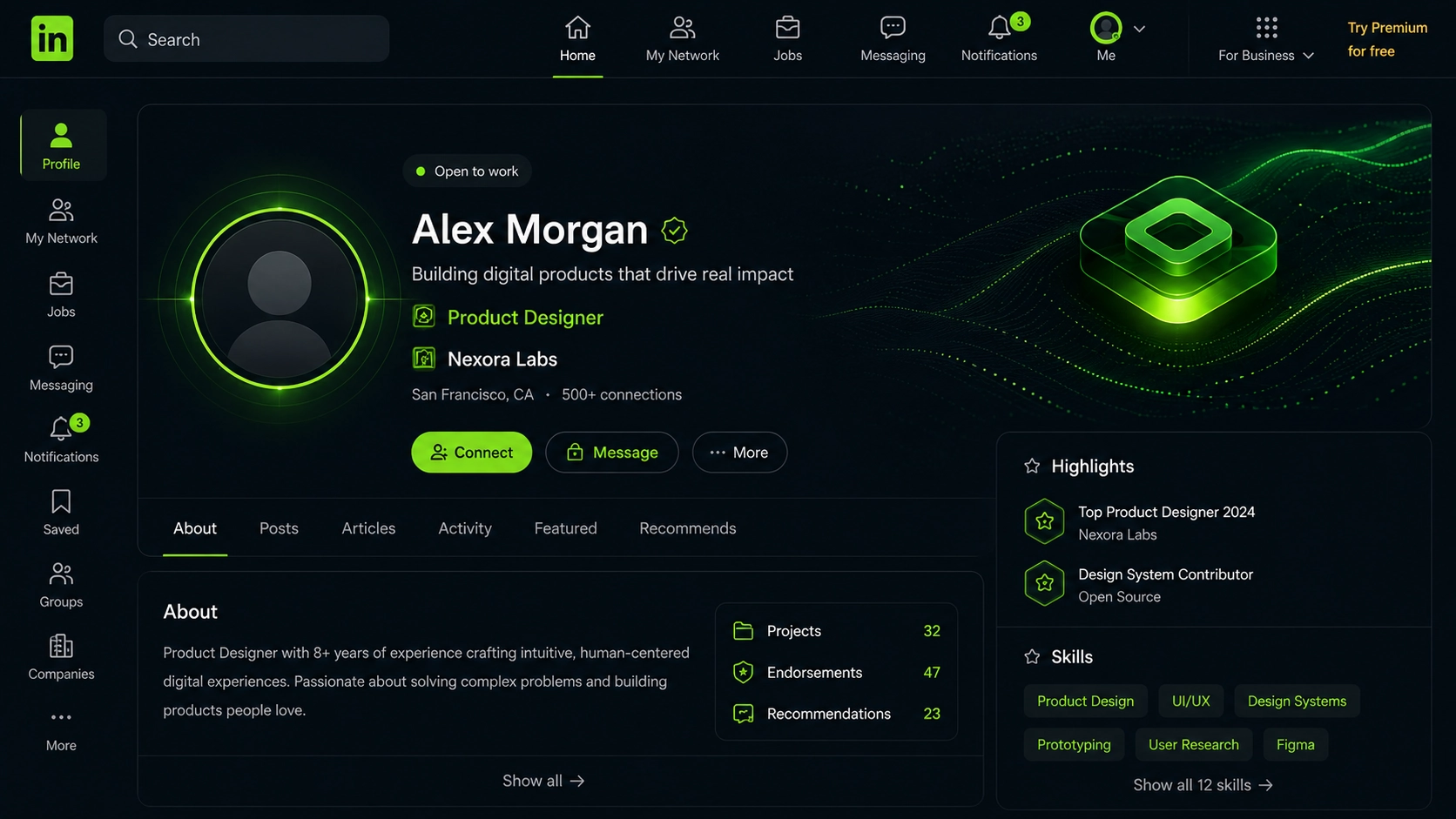
Your Headline — The Most Important Line on Your Profile
Your LinkedIn headline is what appears directly below your name everywhere on the platform. In many recruiter searches, it is one of the most visible profile elements and can strongly influence whether a recruiter clicks to view the full profile.
Most people waste it.
Common weak headlines look like this:
Dreamer | Learner | Growth Mindset | Open to Opportunities
or
Software Engineer | Data Analyst | Product Manager |
AI Enthusiast | Entrepreneur | Consultant
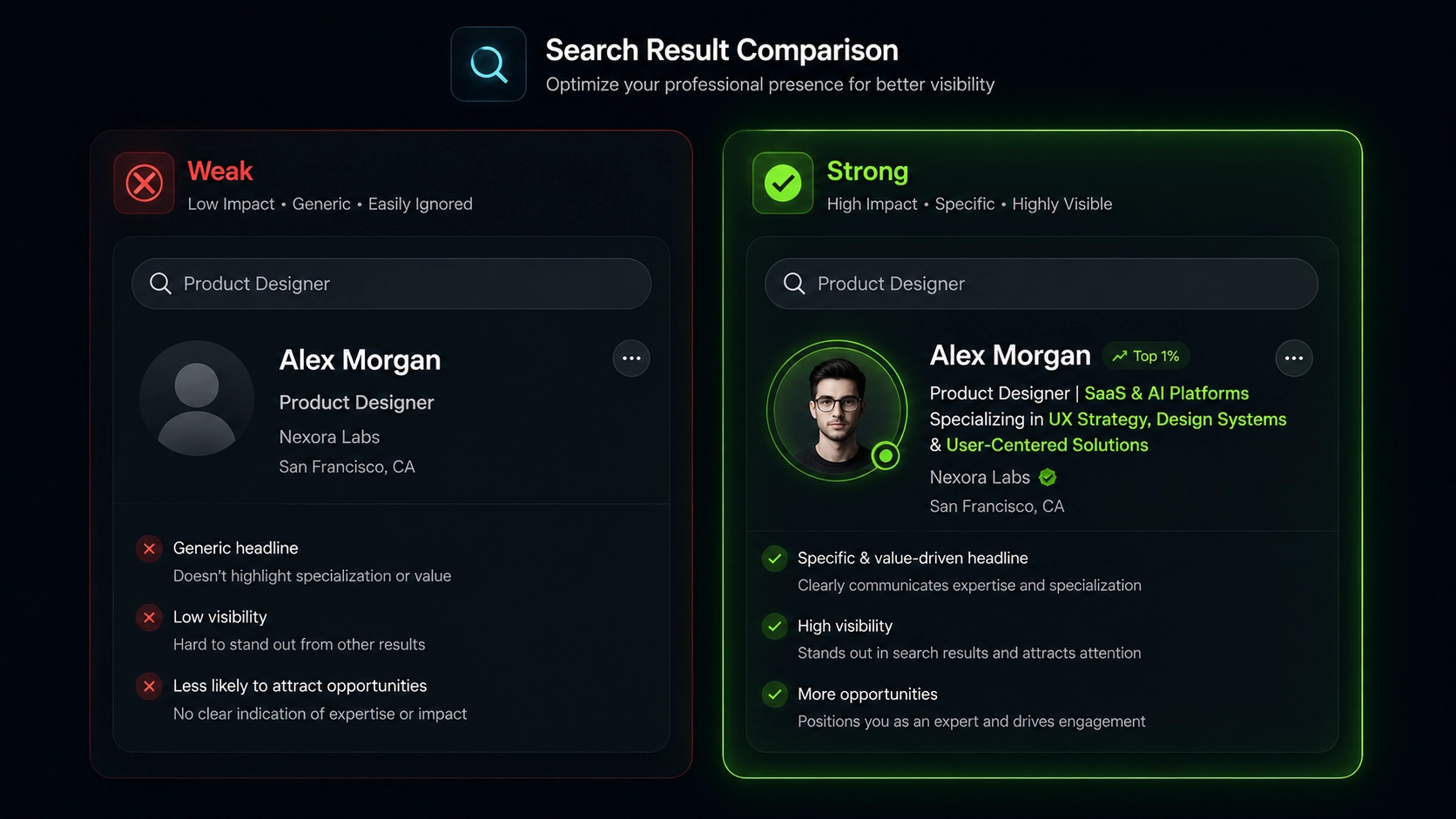
The first communicates nothing useful to a recruiter. The second tries to appeal to everyone and ends up appealing to nobody. When a recruiter is searching for a specific type of person a profile that could belong to anyone does not stand out.
A strong headline communicates three things clearly and quickly. What you do, what you specialize in, and what makes you worth clicking on.
Examples that work:
Data Analyst | SQL, Python and Power BI |
Customer Analytics for E-Commerce

Security Professional | 6 Years Gulf Experience |
UAE and Qatar Operations

Registered Nurse | ICU and Critical Care |
Available for Gulf and Singapore Placements

Backend Engineer | Distributed Systems |
Java and Kubernetes
Each of these tells a recruiter immediately what type of person this is. The profile gets mentally categorized in seconds. That categorization is what determines whether the recruiter keeps reading.
Headline Comparison
Your Experience Section — Where Most Profiles Actually Fail
The About section receives significant attention in many general career resources, but recruiters in active hiring markets typically focus first on your experience section to verify job titles, company sizes, and overall career stability.
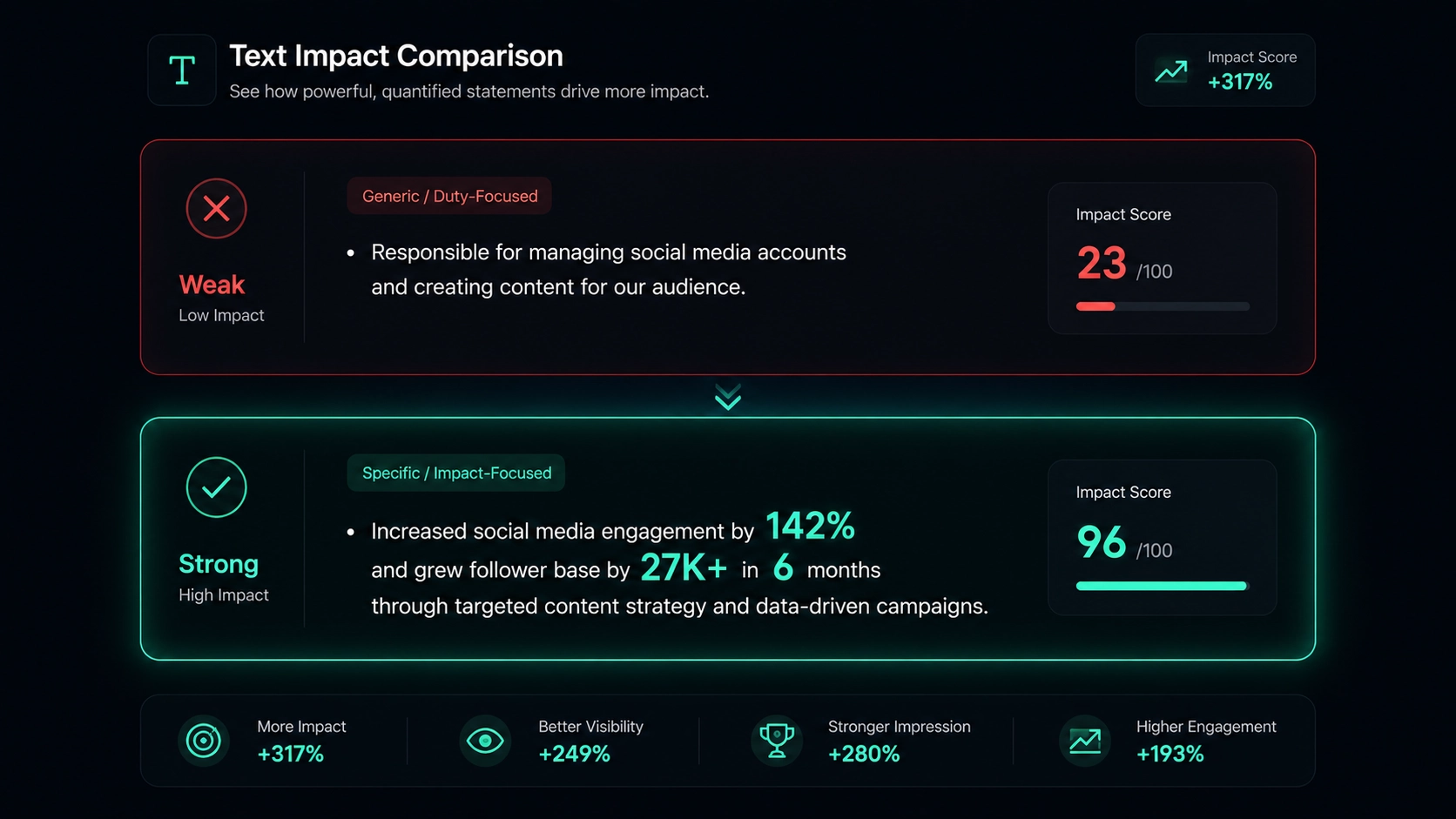
Weak experience descriptions read like job descriptions:
Responsible for managing projects and
coordinating with stakeholders across departments.
That sentence tells a recruiter almost nothing useful. What kind of projects. How many. What departments. What was the outcome. A recruiter reading this has no way to assess whether you were good at your job or just present for it.
Strong experience descriptions focus on outcomes with evidence:
Led 12 cross-functional projects across engineering
and marketing teams, reducing product deployment
time by 35 percent over 18 months.
That sentence is specific. It has a number. It shows scope and result. A recruiter reading this can immediately visualize the type of work and assess whether it matches what they need.
The difference between these two descriptions is not that one person did more impressive work. It is that one person described their work in a way that makes the value visible.
Most professionals have done more impressive work than their LinkedIn profiles suggest. The problem is almost always how it is described not what was actually done.
Experience Description Comparison
Numbers Create Credibility That Words Cannot
This point deserves its own section because it is consistently underestimated.
Compare these two descriptions of the same achievement:
Improved customer onboarding process.
versus
Reduced customer onboarding time from 14 days
to 5 days by redesigning the intake process
and automating document collection.
The second version feels real in a way the first does not. Numbers are specific. Specificity is credible. A recruiter reading the second version immediately believes the person actually did this work. The first version sounds like filler.
Many people avoid numbers because they are not sure of the exact figures or they feel like approximations are dishonest. This is the wrong concern. An approximate number stated honestly is almost always better than no number at all.
If you handled roughly 40 customer calls per day write approximately 40 customer calls per day. If your team grew by around 30 percent write approximately 30 percent. The approximation is honest and the number still does its job of making the claim feel real and specific.
Clear Positioning Beats Trying to Qualify for Everything
One of the most common mistakes on LinkedIn profiles is trying to appear qualified for as many roles as possible.
The thinking makes sense: "If I list more skills and more role types, surely more recruiters will find me." In practice, it works the opposite way. A recruiter searching for a specific type of candidate will bypass profiles that list mismatched, unrelated skills in favor of a specialist whose profile shows immediate alignment.
This does not mean hiding secondary skills. It means defining your primary specialization clearly in your headline and experience section, letting other details act as supporting credentials.
Your Career Story Matters More Than Individual Achievements
Strong LinkedIn profiles do not just list jobs and achievements. They tell a story that makes your progression feel logical and your current level feel earned.
A profile that reads:
Started as analyst
Became senior analyst after demonstrating
strong performance
Led projects as lead analyst
Managed a team of analysts as manager
Now owns the analytics strategy as director
creates a narrative of consistent growth and increasing responsibility. Even without reading every detail a recruiter can see that this person has been consistently trusted with more over time.
That narrative of progression creates an inference of competence that isolated achievements cannot. When two candidates have similar skills the one with a clearer career story often appears stronger because their profile is easier to understand and easier to trust.
For professionals who have changed industries or roles this is especially worth thinking about. How do you tell the story of your career in a way that makes the changes feel intentional rather than random? That framing often matters more than the individual jobs themselves.
The About Section — Less Important Than You Think
This might be the most useful thing in this guide for most people.
LinkedIn creators and career coaches spend enormous amounts of time telling people how to craft the perfect About section. Third person or first person. Story format or bullet points. Personal mission or professional summary.
Based on recruiter recommendations reviewed during our research, the About section is typically reviewed *after* a recruiter has already decided the profile may be relevant based on your headline and experience history.
A mediocre About section rarely kills a strong profile, whereas vague experience descriptions regularly disqualify otherwise decent candidates.
Use this section simply to explain your specialization, your target type of role, and your availability for opportunities in your target markets.
But if you have limited time to improve your LinkedIn profile spend it on your headline and experience descriptions first. Those two sections have more impact on recruiter behavior than anything else on the page.
Posting Activity Matters Less Than You Have Been Told
LinkedIn creators often suggest that posting daily or commenting constantly is essential for profile visibility and job opportunities.
For some people in some industries this is true. Content creators, consultants building a client base, and people in roles where public thought leadership matters will benefit from consistent posting.
For most professionals applying for roles through regional job boards and search filters, this advice is largely irrelevant.
Recruiters looking for candidates are searching by skills, experience, location, and availability. They are not filtering by how often you post.
A strong profile with relevant experience, clear positioning, and availability set to open to work will outperform a weaker profile with daily posting in almost every case.
Post if you genuinely have something useful to share and enjoy doing it. Otherwise, focus your energy on the completeness and quality of your profile sections.
Location Matters More Than People Think
For your type of job search this is genuinely important and most LinkedIn guides never mention it.
A recruiter searching for candidates for a Dubai role may filter by location. If your LinkedIn profile has no location set or lists a city that does not obviously connect to the Gulf market your profile may never appear in their search results regardless of how strong everything else is.
Recruiters searching for Dubai candidates may prioritize profiles showing:
Dubai, UAE
UAE
Middle East
over someone who left the location field blank or set it to a hometown that recruiters in that market would not search for.
The same applies to Singapore, Japan, and South Korea. If you are actively targeting a specific country or city, make sure your LinkedIn location reflects that. If you are currently in your home country but open to relocating, you can set your location preferences to show your target market while keeping your current location visible.
This is a small setting that has an outsized effect on whether recruiters in your target market can find you at all.
How Hiring Expectations Differ By Country
While optimizing headline and experience formatting is universally beneficial, regional hiring expectations and search queries change significantly depending on your target destination.
Gulf Countries (e.g., UAE, Saudi Arabia, Qatar)
- Regional Target: Recruiters actively filter for local presence. If relocating, mention "Open to relocation to Dubai/Riyadh" in your About or Headline.
- Visa Status: Explicitly mention your current residency status (e.g., "Employment Visa", "Visit Visa", or "Open to Relocate") to speed up the screening phase.
Singapore
- Work Authorization: Mention your authorization status (e.g., "Singapore Citizen", "PR", or "Requires Visa Sponsorship") to help recruiters quickly sort applicants.
- Industry Focus: Finance and Tech recruiters match strict regional regulatory standards; detail compliance certifications and regional market experience.
Japan
- Language Ability: Clearly state your Japanese proficiency level (e.g., "JLPT N1", "JLPT N2", or "Native") as it is a critical requirement for almost all domestic hiring.
- Visa & Location: If you are already in Japan on an engineering or humanities visa, state this clearly to reduce recruiter concern about visa processing times.
South Korea
- Korean Level: TOPIK scores or overall Korean business fluency should be listed directly in your Skills or Summary.
- Visa Status: Indicate whether you hold visa eligibility (e.g., F-series residency visa, E-7 professional visa, or require sponsorship).
A Few Practical Steps to Improve Your Profile Today
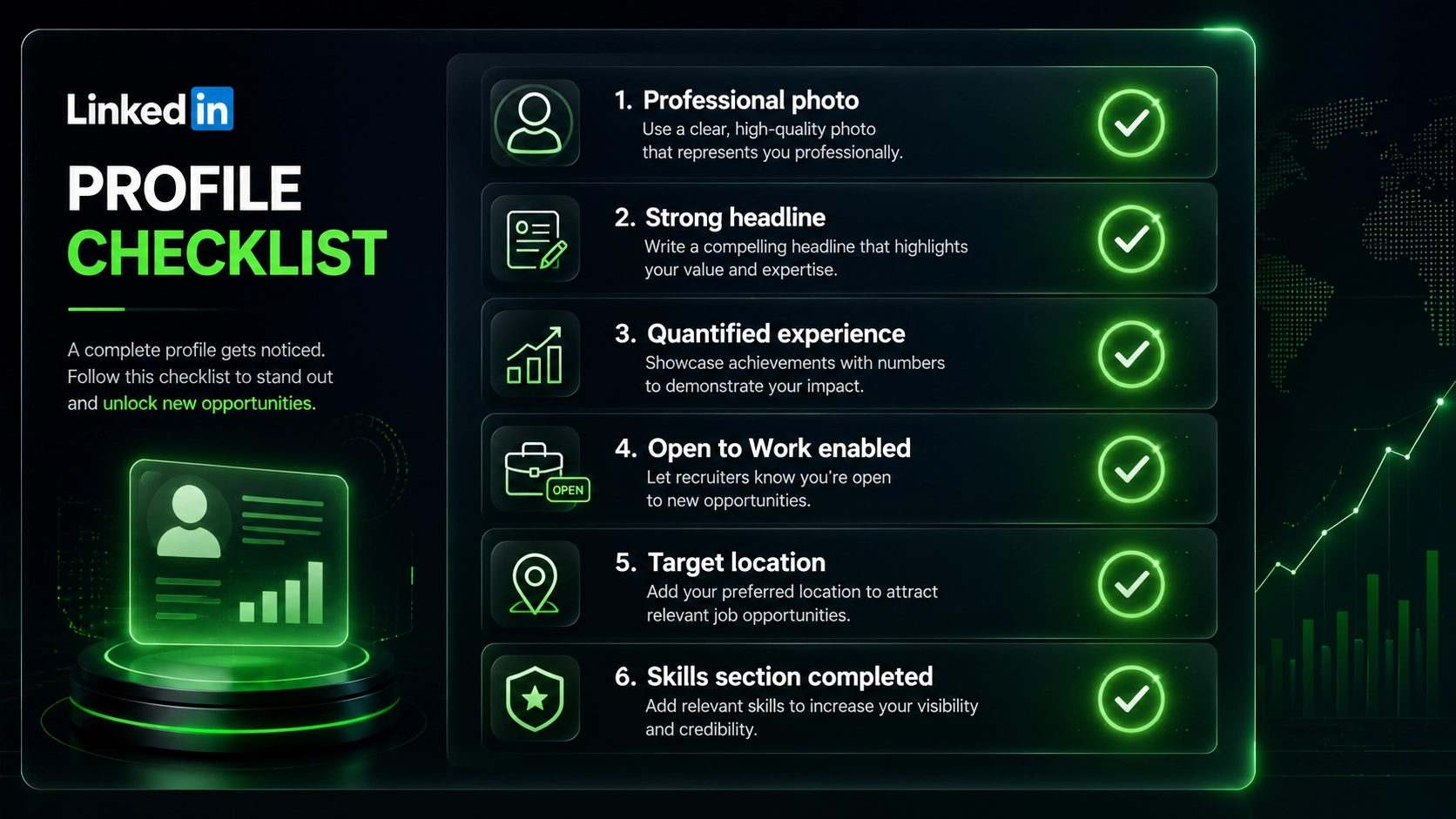
Go through your experience section and identify every bullet point that describes a duty rather than an outcome. Rewrite each one to focus on the results and impact of what you did.
Look at your headline and ask whether a recruiter searching for your specific type of role would immediately understand who you are from it. If not, rewrite it to highlight your specific role, your core specialization, and one credentials/value statement.
Set your profile to open to work if you are actively looking. You can set this to be visible only to recruiters rather than your entire network if you prefer discretion.
Make sure your profile photo is professional. A clear recent photo with a plain background and professional clothing. The same standard that applies to a Gulf CV photo applies to your LinkedIn profile photo.
If you have Gulf experience, Japan experience, Korea experience, or Singapore experience make sure it is clearly visible and specifically described. International and regional experience is a genuine differentiator for recruiters hiring in those markets.
For a full guide on how to build a CV that works alongside your LinkedIn profile for Gulf and Asian job markets see our Gulf work guide and our ATS CV guide.
LinkedIn Profile Checklist
Frequently Asked Questions
How important is LinkedIn for finding jobs in Gulf countries?
It depends on the role. For professional and managerial roles in Gulf countries LinkedIn is genuinely important. Many HR managers and recruitment agencies in UAE, Saudi Arabia, and Qatar actively search LinkedIn for candidates. For semi-skilled and manual worker roles the process typically goes through manpower agencies and direct applications rather than LinkedIn. If you are applying for professional roles in Gulf countries having a strong LinkedIn profile alongside a strong CV is worth the effort.
Should I connect with recruiters I do not know on LinkedIn?
Yes within reason. Sending a connection request to a recruiter at a company you want to work for with a brief personalized message explaining your interest is a legitimate and commonly effective approach. Keep the message short, specific, and professional. Mention the type of role you are looking for and why you are interested in that company specifically. Generic connection requests with no message are less effective but still occasionally lead to opportunities.
Does my LinkedIn profile need to match my CV exactly?
It should be consistent but does not need to be word for word identical. Dates, job titles, and company names should match between your CV and LinkedIn. Descriptions can differ in length and style since LinkedIn allows more space. Any significant inconsistency between your CV and LinkedIn profile raises questions for recruiters who check both which most professional recruiters do.
How many connections do I need before LinkedIn is useful for job searching?
There is no specific threshold but having at least 100 to 150 connections puts you in a better position for search visibility. LinkedIn's algorithm surfaces profiles more readily when they have a meaningful network. More importantly having connections at companies you want to work for or in your target industry means your profile is more likely to appear in relevant searches. Quality of connections in your target industry matters more than raw numbers.
Is a premium LinkedIn subscription worth it for job seekers?
For most people in the early stages of their job search a free LinkedIn account is sufficient. Premium features like seeing who viewed your profile and having InMail credits to message people you are not connected to can be useful in specific situations. If you are actively applying for jobs in competitive markets like Singapore finance or Japan technology and you plan to use LinkedIn heavily for a month or two a short premium trial might be worth testing. For most of your audience applying for Gulf and Asian work opportunities a well optimized free profile will do the job.
What should I do if I have significant employment gaps on my LinkedIn profile?
Handle gaps the same way you would on a CV. If the gap involved any relevant activity such as freelance work, study, certifications, caregiving, or personal projects you can add these as entries on your profile. If the gap was simply time between jobs you do not need to explain it in your profile itself. A brief honest explanation is better addressed in a cover letter or interview than forced onto your profile in a way that draws more attention to the gap rather than less.
Should I mention my visa status on my LinkedIn profile?
Yes, especially if you are targeting international roles in markets like Singapore, Japan, South Korea, or the Gulf. Recruiters in these countries often prioritize candidates who already possess work authorization or possess clear visa eligibility. Stating your visa status (e.g., 'Singapore Citizen', 'E-7 Visa Eligible', or 'Open to Relocation') in your About section or headline can save time and prevent you from being filtered out early.
Important Note
There is no single LinkedIn profile format that guarantees interviews. Hiring practices vary by company, recruiter, industry, and country. The recommendations in this guide reflect common practices and recurring advice from recruiters, but employers may evaluate candidates differently.
More Guides
Continue Your Research
Explore the guides required to build the perfect CV.
Japan Work Guide
Visas, jobs, accommodation, banking, and what living in Japan actually costs. A practical guide for workers and students from Asia moving to Japan in 2026.
Gulf Work Guide
Honest guide to working in Gulf countries. Avoid scams, understand contracts, know your rights, and build a CV that gets you hired in UAE, Saudi, and Qatar.
South Korea Guide
Honest guide to South Korea. Learn about GKS scholarships, E-9 visas, Korean language reality, contract verification, and what to know before you go.
CV Toolkit
Build Your Professional CV for Free
Pick from 30+ recruiter-approved designs and start applying in minutes. 100% Free.
Cover Letter Maker
Professional matching correspondence. Build for Free.
Business Card Maker
Sleek, modern designs for authority branding. 100% Free.
100% Free • No Credit Card • No Watermarks • Instant Access