Student Internship CV Guide — Free Tips for 2026
Landing your first internship starts with a strong CV. Learn exactly what recruiters look for from students, common mistakes to avoid, and how to stand out with no experience.
How to Get Hired Now
Your Student Success Plan
The First Job Plan
You don't need a massive resume to look impressive. Focus on these five key focus areas to build a one-page document that stands out.
Focus on School Projects
Did you build an app for class or lead a group presentation? That counts. Explain the problem you solved and the result you achieved.
Get One Free Certificate
Spend a weekend getting a free certificate in something like Google Analytics or Basic Coding. It proves you have the 'extra mile' mindset.
Use Real Numbers
Don't just say you 'helped.' Say you 'coordinated 3 weekly meetings' or 'managed a $200 budget.' Numbers prove your impact instantly.
List Relevant Classes
Don't just list your major. List 3 or 4 advanced classes related to the job. It proves you have the base knowledge they need.
The One-Page Rule
As a student, you never need more than one page. Keep it short, sharp, and high-density. If it doesn't add value, cut it.
2-Week CV Plan
Follow this exact timeline. Each step builds on the last. By day 14, you will have a CV that gets interviews.
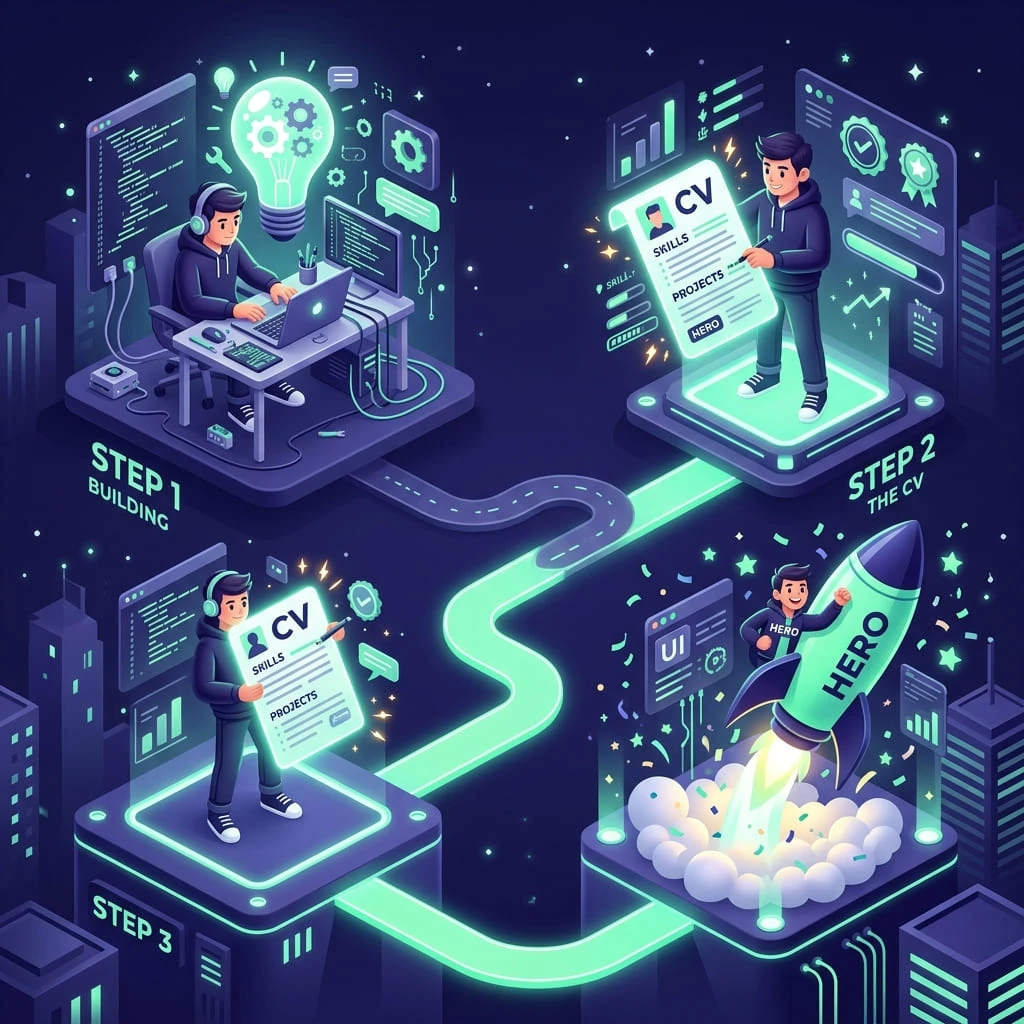
Don't have experience? Go get some. Volunteer for a local charity or start a small personal project. This gives you something real to write about.
Use our free CV maker. Fill in your education first, then your projects, and finally any part-time work or volunteering.
View Summary Examples →Read your CV three times to find typos. Ask a friend to look at it. Once it is clean, start applying for those internships!
Before and After: Student CV
"I am a hardworking student"
"Maintained a 3.8 GPA while working 10 hours a week at a local cafe"
"Did a group project in class"
"Led a team of 4 to build a marketing plan for a local business and received an A grade"
"Helped with a charity event"
"Organized a charity bake sale that raised $200 for a local animal shelter"
"I have good computer skills"
"Self-taught Canva and built 10+ posters for the university debate club"
How to Write Like a Professional
Your 'voice' must match the company culture. Here is how to adjust your tone based on where you are applying. Use our simple tips to adjust your writing style instantly.
Banking & Law
Result: Conservative, high GPA, rigid.
Tech & Startups
Result: Casual-pro, fast-paced, technical.
Creative Agencies
Result: Bold, personality-heavy, adaptable.
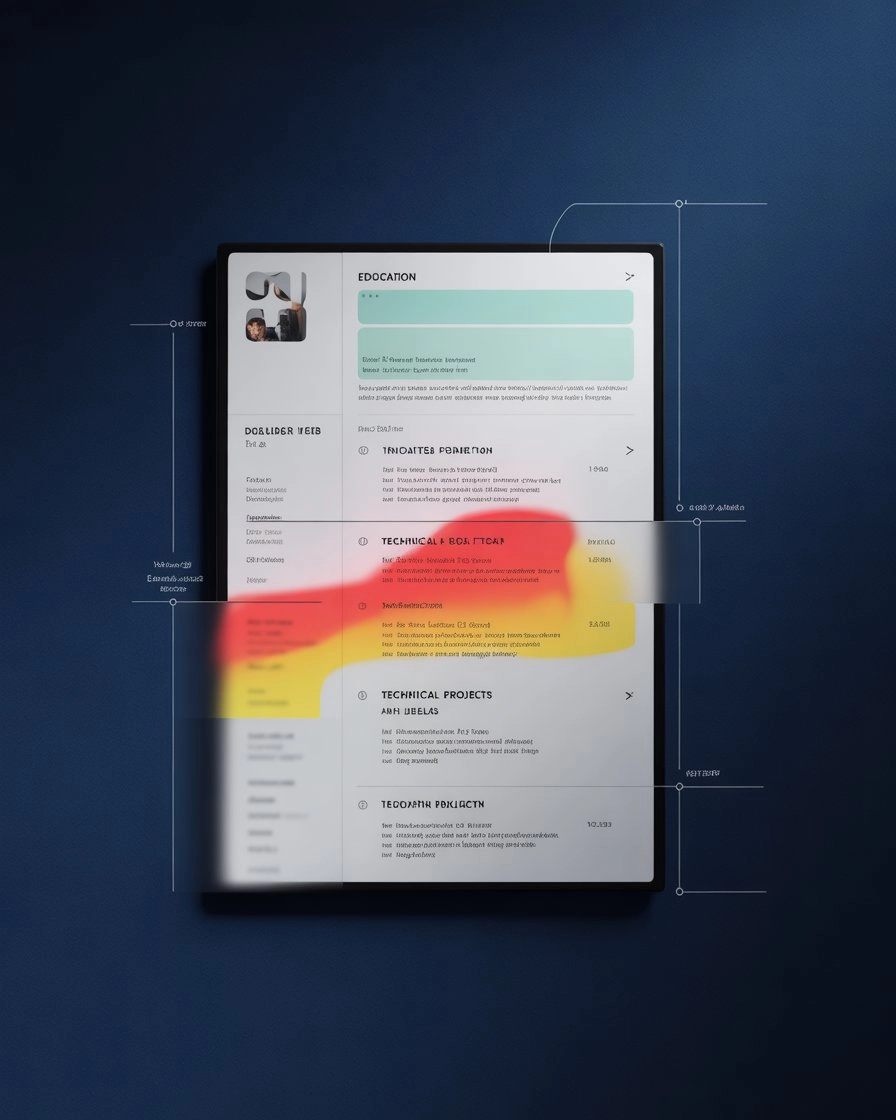
Eye-tracking scans show strong immediate focus on your Education and Project sections.
Where Recruiters Look
When scanning resumes with no experience, recruiters scan the page quickly looking for clear educational credentials and technical projects. Our CV format analysis reveals the typical path eyes take when evaluating students.
Education Focus
For current students and fresh grads, this is the first section checked.
Project Titles
Scanned to see how you applied your learning in practice.
Skills Check
Audited to ensure you have the mandatory tool-set needed for the job.
Ready to land your first internship?
Don't let a simple formatting error hold you back. Use our tested templates to build your CV in minutes.
Build My Student CV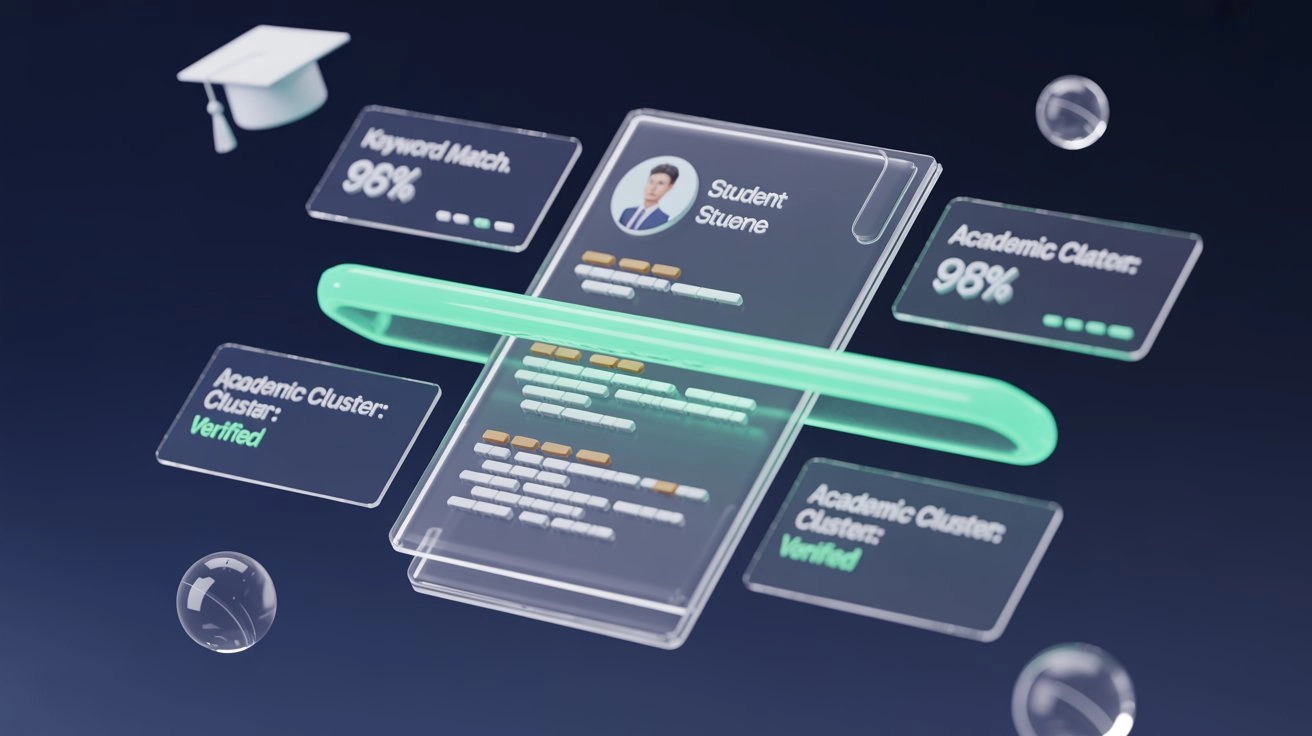
ATS Readability
We design our layouts to be easily read by applicant tracking systems so your application doesn't get blocked by automated filters.
- Standard SectionsFully Compatible
- Text Layout100% Readable
How Schools Screen You
Large firms use automated software to filter through thousands of student applications. If your CV isn't readable by these systems, a human will never see it. Ensure you are using an ATS-friendly CV for optimal scanning.
Project Weighting
Modern systems weigh school projects as work experience. Use a clear action-and-result format to describe them.
The Graduation Date
Recruiters filter by availability. If you don't list your expected graduation date (e.g., Spring 2026), you might remain invisible to their systems.
List Specific Skills
Avoid 'keyword stuffing.' Focus on 12-15 specific skills (like 'React 18' or 'Advanced Excel') rather than generic terms.
Format Safety
Stick to a clean, single-column layout. Fancy graphics or tables often break the ATS scanner and get you rejected.
Industry Plans
Your CV needs to speak the language of your target industry. Use these sector-specific strategies to win. Check our CV examples hub for path-specific layouts.
Tech & Engineering
"Lead with your GitHub link and technical projects. Show them you can build things, not just study them."
Finance & Consulting
"Keep Education and GPA at the top. Highlight case competitions and honors to prove you are a high-performer."
Marketing & Creative
"Focus on your social proof. Use metrics like 'Grew club followers by 50%' to prove you understand growth."
Healthcare & Science
"Lead with your clinical hours and lab certifications. Accuracy and compliance are your biggest selling points."
Mistakes to Avoid
Even with a great degree, these simple errors can get you rejected. Avoid these traps at all costs.
The 'High School' Trap
Unless you are a first-year student, remove your high school details. Focus on your university wins and specialized projects.
The Objective Statement
Don't use an 'Objective' like 'I want to learn.' Use a Professional Summary that says 'I can deliver value through...'
Vague Skills
Avoid generic skills like 'Microsoft Word.' Focus on specific tools and frameworks that are actually used in the job.
FAQ
The real questions students ask — answered honestly.
No. Only include your GPA if it is 3.0 or above. If it's lower, let your projects and extracurriculars prove your capabilities instead.
Yes, but be careful. For Marketing or Design, color is great. For Finance or Law, stick to a clean, black-and-white professional layout.
Only if they have agreed to it and know your work well. A better approach is to write 'References available upon request' to save space.
Focus on YOUR specific contribution. Instead of 'Worked on a project,' say 'Led the data analysis for a 5-person team project.'
In the UK, US, and Australia, do NOT include a photo. In parts of Europe and Asia, it is more common. Always research the local norm.
Keep it to exactly one page. Recruiters spend seconds on each application, and a single, high-density page is far more impactful than a 'fluffy' two-page document.
If you are a first-year student, yes. If you are a junior or senior, remove it. Your university achievements and projects are much more relevant to employers.
Executive Toolkit
Build Your Professional CV for Free
Pick from 30+ board-ready designs and establish your leadership in minutes. 100% Free.
Cover Letter Maker
Professional matching correspondence. Build for Free.
Business Card Maker
Sleek, modern designs for authority branding. 100% Free.
100% Free • No Credit Card • No Watermarks • Instant Access
Establishment Research
Continue Your Research
Explore the high-authority guides required to build the perfect CV.
CV Skills Guide
Stop listing 'Communication.' Here's what recruiters actually scan for — with proven examples by industry and experience level.
Gulf Jobs CV
Passport-ready photo, clear visa status, and GCC eligibility. The Gulf CV follows strict regional rules—here is the exact 2026 blueprint.
Canada Jobs CV
Canadian CVs follow strict privacy rules. No photo, no age, no SIN. Learn the reverse-chronological format Toronto employers actually expect.