

Chef Skills for CV
What to List (2026)
A chef CV is about demonstrating that you can run a kitchen, not just that you can cook. Employers hiring chefs want to see your experience with menu development, cost control, kitchen team management, and food safety compliance. These operational skills matter as much as your culinary talent.
If you are applying for positions in hotels or restaurant groups in the Gulf, Singapore, or other international markets, your cuisine specialization and food safety certifications carry significant weight. HACCP training is practically a requirement for any serious kitchen role.
The skills below cover what kitchen managers and F&B directors actually look for when reviewing chef applications.
Top 10 Chef Skills Employers Look For
Example: How These Skills Look on a Real CV
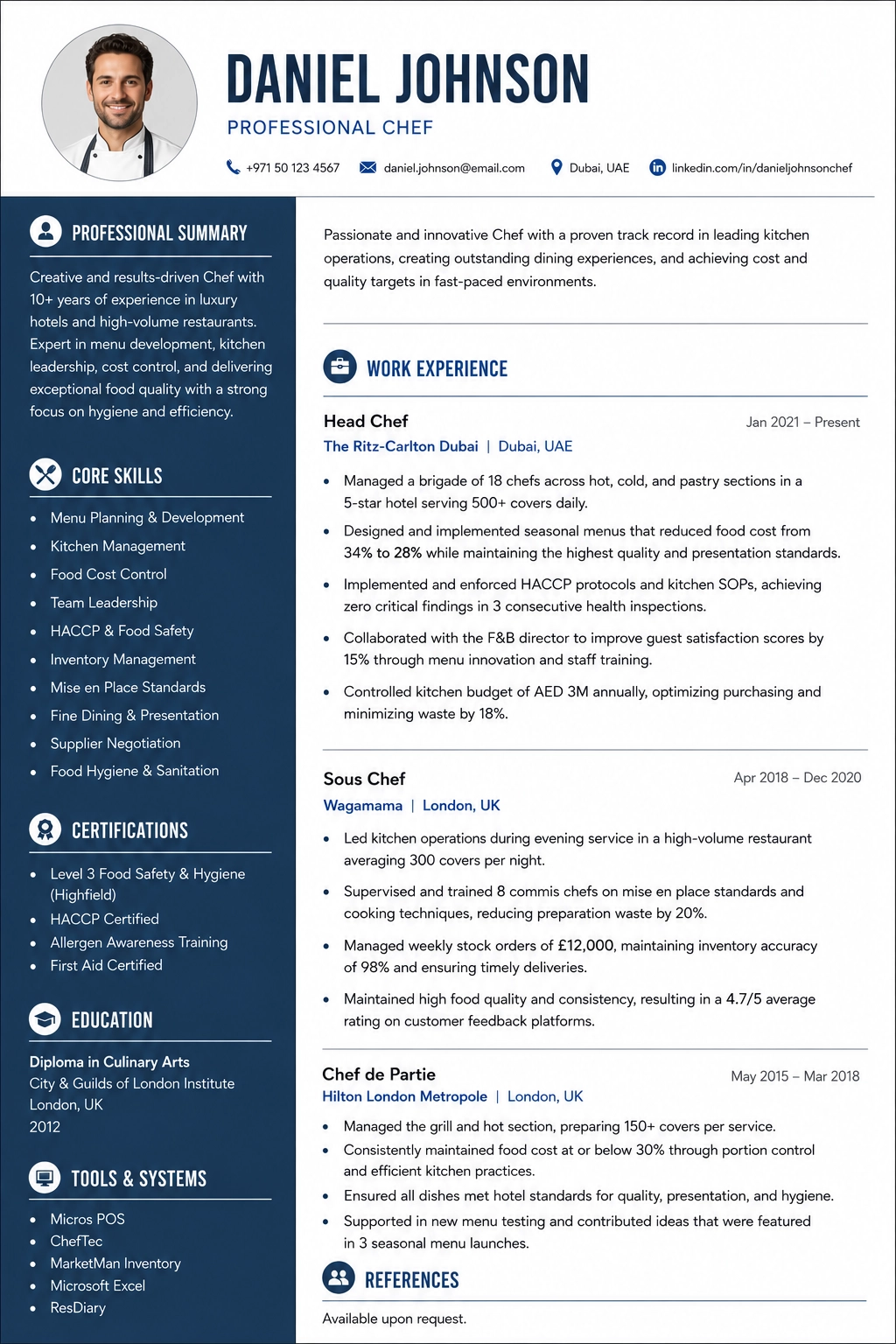
Listing skills is important, but showing how you used them in real work experience is what gets you interviews. Here is how a strong Chef CV presents these skills.
Head Chef
The Ritz-Carlton Dubai
- •Managed a brigade of 18 chefs across hot, cold, and pastry sections in a 5-star hotel serving 500+ covers daily
- •Designed seasonal menus reducing food cost from 34% to 28% while maintaining quality standards
- •Implemented HACCP protocols achieving zero critical findings in 3 consecutive health inspections
Sous Chef
Wagamama
- •Led kitchen operations during evening service for a high-volume restaurant averaging 300 covers per night
- •Trained 8 commis chefs on mise en place standards, reducing preparation waste by 20%
- •Managed weekly stock orders of £12,000, maintaining inventory accuracy of 98%
Visual CV Example Template
Complete Chef Skills List
Common ATS Keywords for Chef
Applicant Tracking Systems scan your CV for specific keywords before a human ever reads it. Make sure these terms appear naturally in your skills section and work experience.
Chef Skills Explained in Detail
Understanding what each skill really means helps you describe it accurately on your CV and discuss it confidently in interviews.
Menu Planning and Development
Menu planning is one of the most commercially important skills a chef can demonstrate. It involves far more than choosing dishes you enjoy cooking. A well-planned menu balances flavour profiles, considers seasonal ingredient availability, manages food costs within target percentages, and caters to the dietary requirements and preferences of the target clientele. In hotel and restaurant environments, menus must also align with brand identity and pricing strategy.
Effective menu development requires costing every dish to the gram, calculating gross profit margins, and testing recipes under service conditions before they go live. Chefs who can demonstrate that they reduced food costs or increased covers through menu redesigns are highly valued by employers. Seasonal rotations, special event menus, and buffet planning for large-scale catering all fall within this competency.
On your CV, describe the types of menus you have developed and the impact they had. State the number of covers your menu served, the food cost percentage you achieved, and any revenue improvements linked to your menu changes. For example, you could write that you designed a 45-item a la carte menu for a 200-cover restaurant achieving a food cost of 29%.
HACCP Compliance and Food Safety
HACCP, or Hazard Analysis and Critical Control Points, is a systematic approach to food safety that identifies, evaluates, and controls hazards throughout the food production process. For any chef working in a professional kitchen, HACCP compliance is not optional. Health inspectors, hotel auditors, and franchise standards teams all assess kitchens against HACCP principles, and failures can result in closures, fines, or reputational damage.
A chef skilled in HACCP understands critical control points such as cooking temperatures, cooling procedures, and cross-contamination prevention. They maintain daily records including temperature logs for fridges, freezers, and cooked products, and they ensure all staff are trained on allergen handling, personal hygiene, and cleaning schedules. Leading a kitchen that consistently passes inspections with zero critical findings is a strong indicator of competence.
On your CV, state your HACCP certification level and issuing body, and describe the outcomes of your food safety management. Mention inspection results, audit scores, and any improvements you introduced. For example, you might write that you implemented a revised HACCP plan across 3 kitchen outlets resulting in a 5-star food hygiene rating maintained for 2 consecutive years.
Kitchen Brigade Management
Managing a kitchen brigade means leading a team of chefs through the intensity of daily service while maintaining food quality, timing, and safety standards. A brigade can range from 3 people in a small restaurant to 30 or more in a large hotel kitchen with multiple outlets. The chef in charge must delegate tasks clearly, manage station assignments, and ensure every section is prepared and stocked before service begins.
Beyond service management, brigade leadership includes writing staff rosters, managing labour costs, conducting performance reviews, and training junior chefs on techniques and standards. A chef who can develop their team reduces turnover and improves consistency, both of which directly impact the business. Handling conflicts, managing different skill levels, and maintaining morale during long and physically demanding shifts are all part of this skill.
On your CV, specify the size of the brigade you managed, the type of establishment, and any measurable outcomes from your leadership. For example, state that you managed a brigade of 14 across 2 outlets in a 5-star hotel, reduced staff turnover by 30% through structured training programs, and maintained consistent service standards across 400 daily covers.
Skills to Avoid on a Chef CV
These generic terms appear on nearly every CV. They tell the recruiter nothing specific about your abilities and will not help you pass an ATS filter.
How to Present These Skills on Your CV
State your cuisine specialization prominently: Italian, Asian fusion, Arabic, pastry, or whatever your strength is.
In your experience section, mention the type and size of establishment: five-star hotel with 300 covers, fast casual with 150 daily, or catering for events of 500 plus.
List your food safety certifications with dates. HACCP, food hygiene level 2 or 3, and any other relevant qualifications.
Include any awards, competitions, or published recipes if applicable.
Frequently Asked Questions
Do I need formal culinary education to be a chef?
Not always. Many successful chefs have progressed through kitchen experience rather than formal training. However, a culinary diploma or degree can help when competing for positions at high-end establishments or international hotels.
Should I mention my cuisine specialization?
Yes, it should be one of the first things on your CV. A hotel in Dubai looking for a pastry chef does not need to see your Thai cuisine experience prominently. Lead with what matches the job.
How important is HACCP certification?
Very important. Most employers consider it mandatory for any kitchen supervisor or chef role. If you do not have it, consider getting certified before your job search.
Should I include my social media or food portfolio?
Only if it is professional and relevant. A well-curated Instagram showing your plating and dishes can strengthen your application. A personal food blog with casual content may not add professional value.
Build Your CV Free
Ready to build your CV with a properly structured skills section? Our free CV builder helps you create a professional, ATS-friendly CV with no login, no watermarks, and instant PDF download.
Related Skills Guides
CV Toolkit
Build Your Professional CV for Free
Pick from 30+ recruiter-approved designs and start applying in minutes. 100% Free.
Cover Letter Maker
Professional matching correspondence. Build for Free.
Business Card Maker
Sleek, modern designs for authority branding. 100% Free.
100% Free • No Credit Card • No Watermarks • Instant Access