
How AI Is Ruining CVs and Cover Letters
Most AI-written CVs use the same buzzwords and generic phrases. Here is how recruiters spot them and how to write a CV that actually gets interviews.
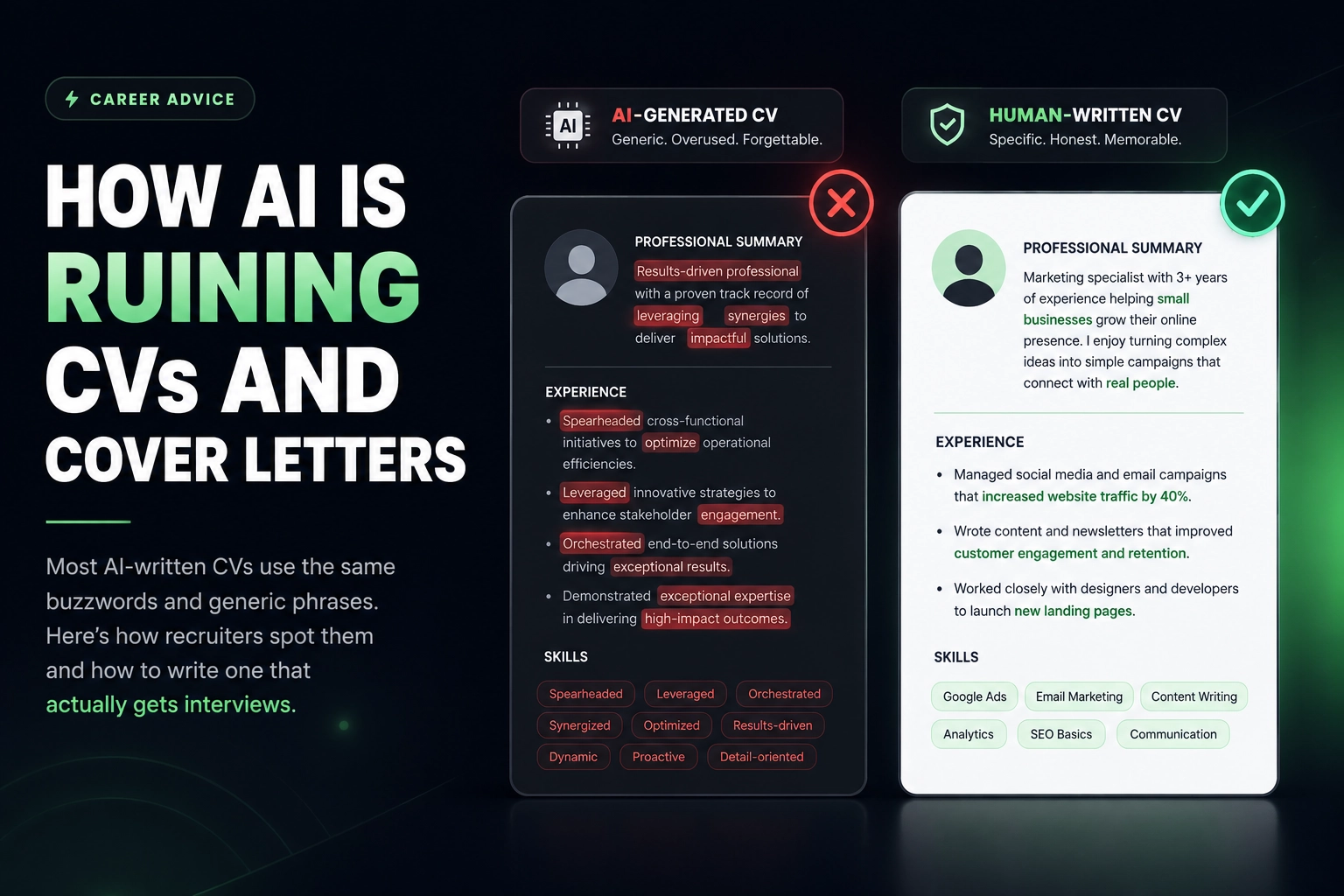
Everyone has access to AI now. Which means everyone is using it to write their CV and cover letter. Which means every CV and cover letter sounds exactly the same.
Many recruiters recognize these patterns after reading hundreds of applications. They have been reading the same sentences for the past two years. The same structure. The same words. The same exaggerated claims written with total confidence about someone the AI has never actually met.
Here is the problem nobody talks about honestly. Your CV is supposed to be about you. How would an AI know you better than yourself?
What AI Written CVs Actually Sound Like
AI does a few things consistently that give it away immediately to anyone who reads enough CVs. If your CV needs to pass an ATS screening system before a human even sees it, the last thing you want is AI generated filler that says nothing specific.
It exaggerates everything
A person who helped organize a small office event becomes someone who “spearheaded cross-functional stakeholder engagement initiatives.” A person who answered customer emails becomes someone who “orchestrated omnichannel customer success strategies.”
Nobody talks like this. Nobody thinks like this. And recruiters who read hundreds of CVs recognize it instantly.
AI Version
Spearheaded cross-functional stakeholder engagement initiatives resulting in enhanced operational efficiency.
Human Version
Coordinated weekly meetings between the sales and warehouse teams, reducing delivery mistakes by about 20%.
It uses words real people never say
Spearheaded. Leveraged. Orchestrated. Synergized. Demonstrated exceptional proficiency. Passionate about driving impactful outcomes.
These words are not impressive. They are signals that no real human wrote this. A person describing their own work uses words they actually use when talking. Not words that sound like a business report written by a robot trying to sound like a human.
It makes you sound like three different people
AI pulls from general templates and tries to make everyone sound impressive in the same way. The result is a CV that does not sound like you. It sounds like a generic professional who has done everything perfectly and never made a mistake or had a specific personality. Browse real CV examples to see what genuine human written CVs actually look like.
Your CV description should sound like you wrote it. Because you are the one being hired. Not the AI.
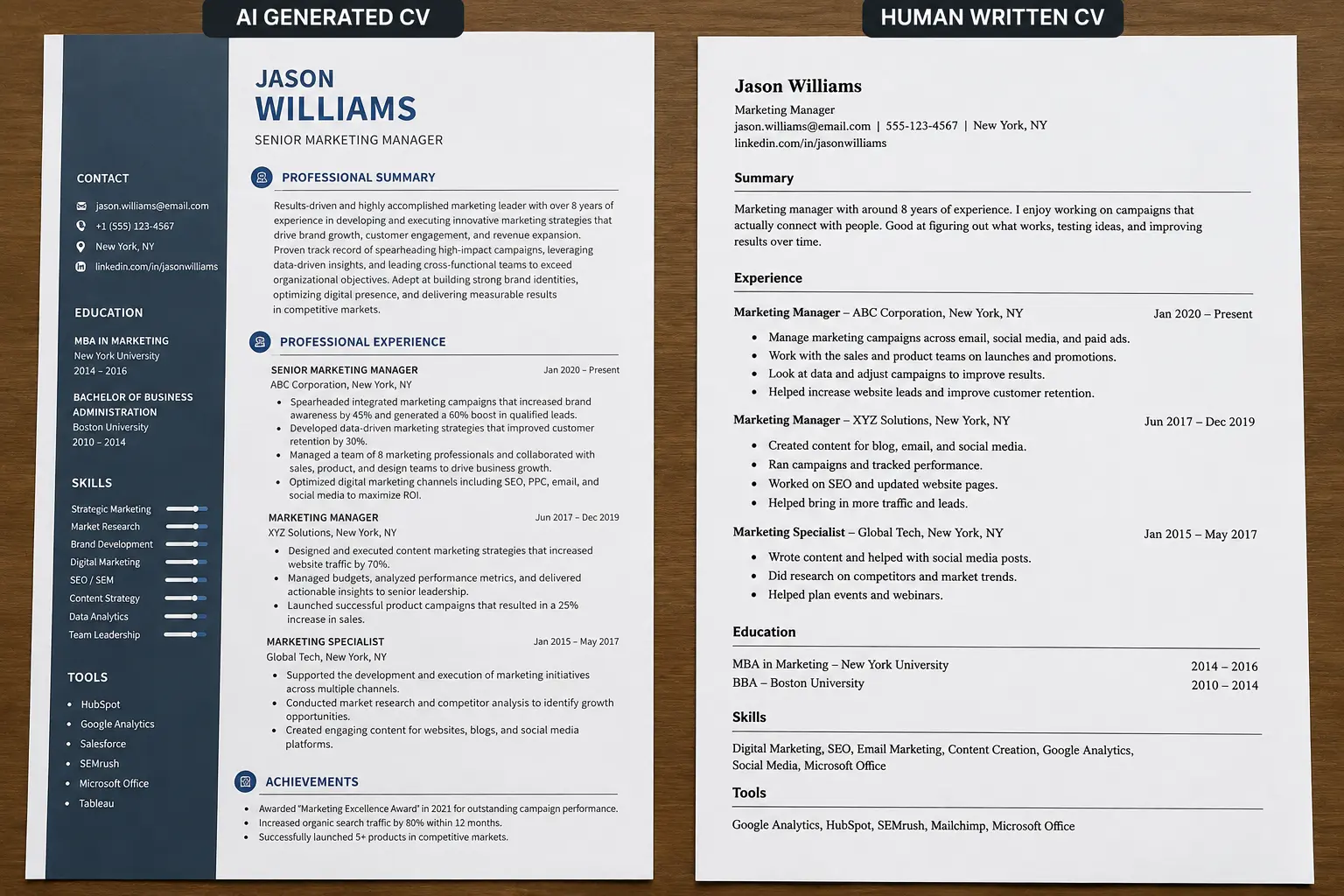
Side by side showing an AI written CV summary full of buzzwords and exaggerated claims versus a human written one that is specific, honest, and direct — same person, same experience, completely different impression.
What AI Written Cover Letters Actually Sound Like
The cover letter problem is even worse.
Many AI-generated cover letters follow a very similar structure. Opening sentence expressing enthusiasm for the role. Paragraph about relevant experience. Paragraph about why this company specifically. Closing sentence expressing hope for an interview.
The pattern repeats across nearly every application. For nearly every job. At nearly every company.
Many recruiters who review hundreds of applications begin noticing the same AI writing patterns over and over. The language is too clean. Too balanced. Too confident in a way that feels empty. There is nothing in it that could only have been written by this specific person applying for this specific job.
Compare that to a cover letter where someone says something specific and honest. Something that could only come from a real person who actually thought about why they want this particular role. Even if it is shorter and less polished it reads as genuine. And genuine beats impressive every time. Our free cover letter builder helps you structure one that sounds like you, not like everyone else.
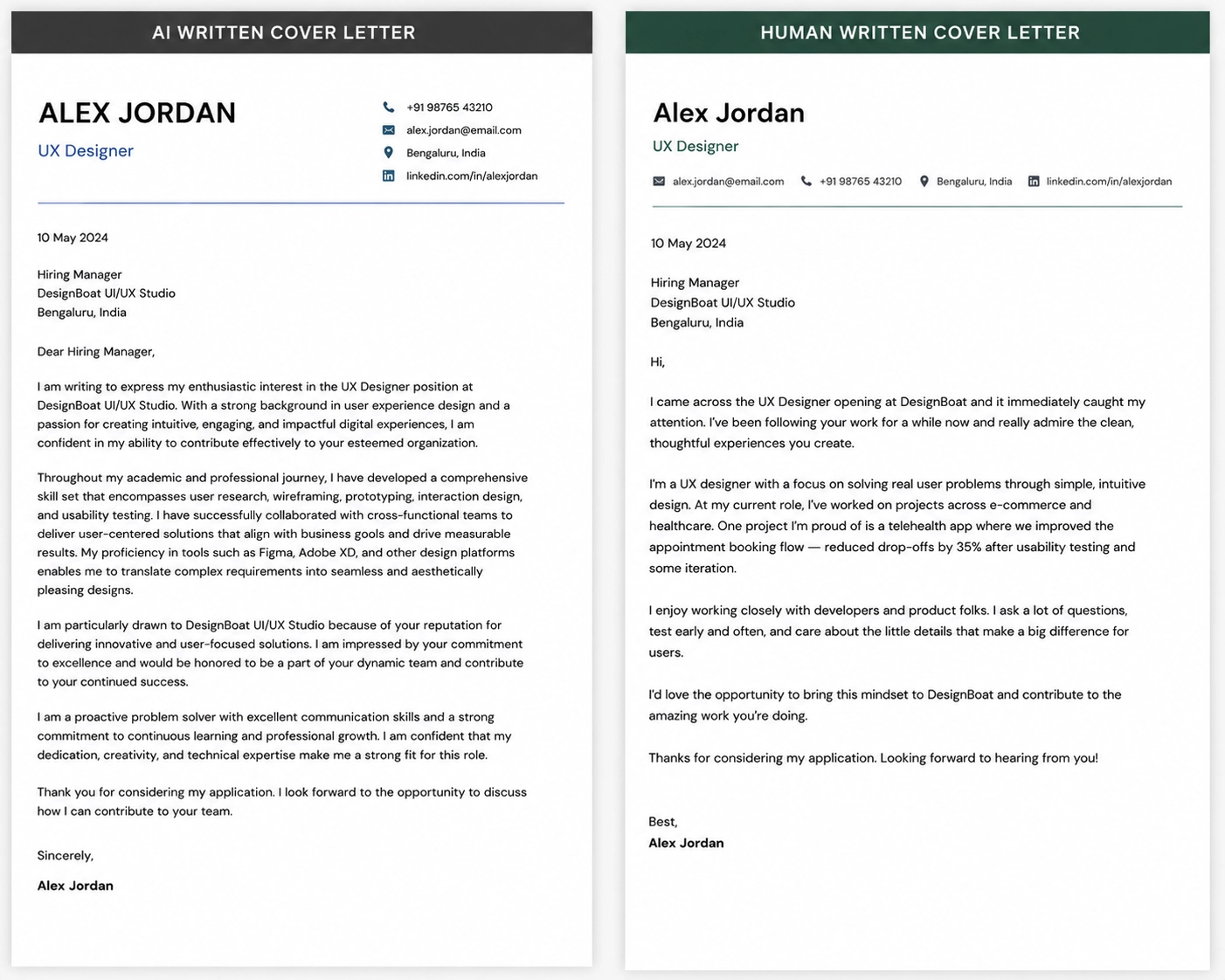
Side by side showing an AI generated cover letter with identical structure and buzzwords versus a short, honest, human written one that says something specific and real.
The Honest Fix
You do not need to write a perfect CV or cover letter. You need to write a real one.
Describe your experience in the words you would actually use if someone asked you about your job in a conversation. Not the words that sound most impressive. The words that are most accurate.
If you managed a team of five people say you managed a team of five people. Not that you “led a high-performing cross-functional unit of five professionals.”
If you answered customer complaints say you answered customer complaints. Not that you “delivered exceptional omnichannel customer resolution experiences.”
The specific honest version is always more believable than the inflated AI version. And believable is what gets you hired. If you are a student or recent graduate, our student CV guide covers this in more detail.
What AI Is Actually Good For
AI is excellent for:
- Fixing grammar
- Rewriting awkward sentences
- Brainstorming bullet points
- Checking spelling
- Suggesting stronger action verbs
AI is excellent at making your writing sound more professional. It is terrible at making it sound more personal.
Where people go wrong is copying AI's first draft and submitting it unchanged.
The Biggest Mistake
The biggest mistake is asking AI to write your entire CV from scratch.
Instead, write your experience first, then ask AI to improve grammar, shorten sentences, or fix formatting.
That way the content stays yours while the writing becomes clearer.
Your CV should sound like you. If it does not sound like something you would actually say about yourself it probably needs to be rewritten.
We built SmartCV Builders to help you create a CV that is genuinely yours. Clean formatting, no watermarks, no login, completely free.